

SHIPPING AVAILABLE FROM 14 DECEMBER
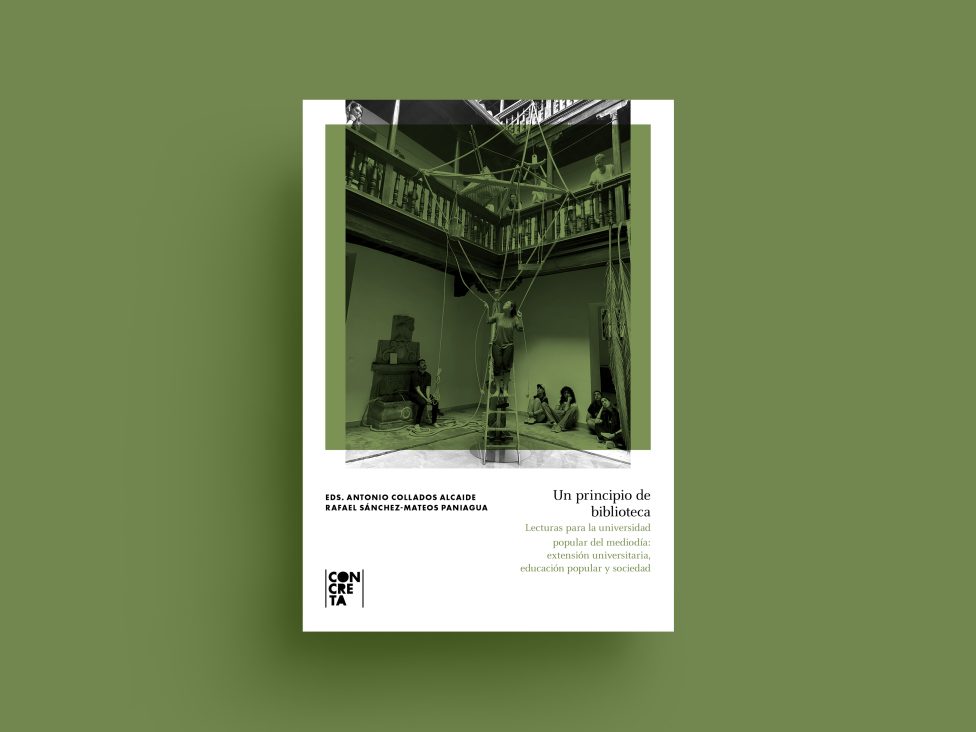
What remains of the university’s emancipatory promise? Which forms of knowledge, experiences and ways of thinking have historically been relegated to its margins? And what might we learn from those initiatives that imagined education as a practice of freedom, a collective adventure or a way of life?
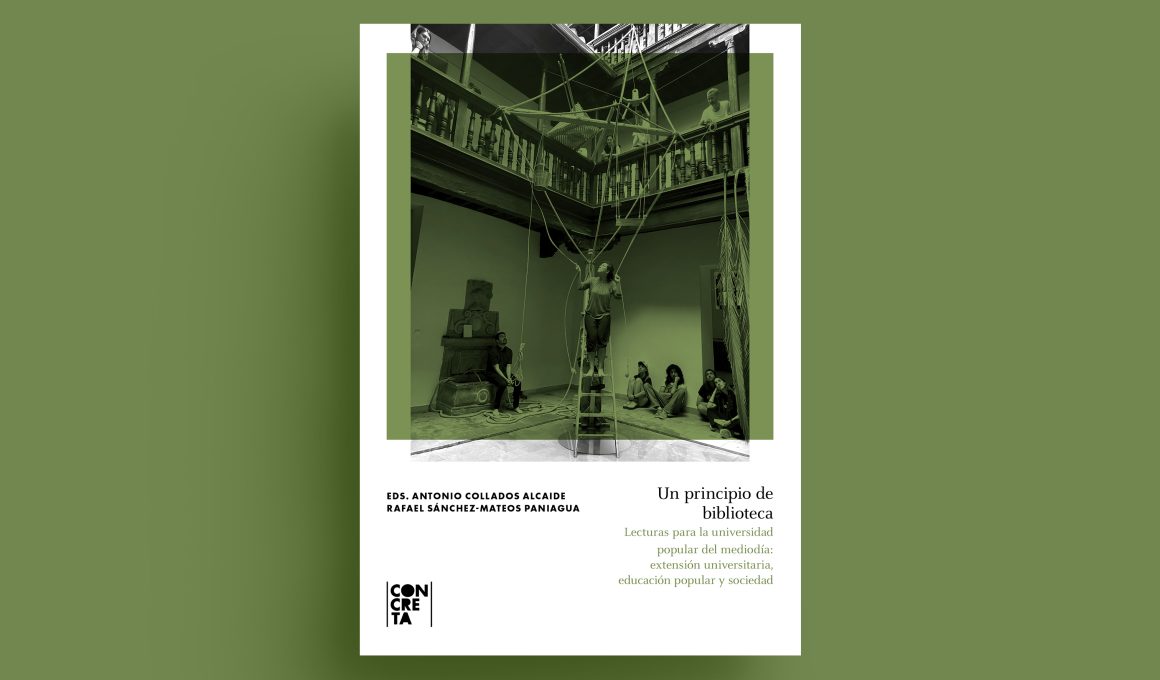
Un principio de biblioteca brings together a collection of essays and conversations that examine the relationships between knowledge, culture and social transformation. From the earliest experiences of university extension and traditions of working-class education to experimental pedagogies, autonomous learning communities and contemporary artistic practices, its pages trace a constellation of experiences that have moved beyond the boundaries of the academic institution.
Far from understanding the university as a place reserved for the transmission of specialised knowledge, the different voices contributing to this volume explore the possibilities of a form of thinking that emerges in relation to other bodies, territories, memories and desires. The history of Andalusianism, popular cultures, forms of self-organisation, convivial forms of knowledge and the relationships between art and education appear here as fields in which to experiment with other ways of learning, teaching and making worlds.
Rather than setting out a programme for the university of the future, this book invites us to revisit the questions that the university has gradually left behind: whom it exists for, whom it belongs to, which ways of life it makes possible and which it excludes. An invitation to think of education not only as an institution to be transformed, but as a common practice that necessarily remains a work in progress.
With the collaboration of the organisations behind the project: La Madraza Centre for Contemporary Culture and the Daniel and Nina Carasso Foundation, within the framework of the fourth call for Alliances for Cultural Democracy.
Contributions by:
Antonio Collados Alcaide, Rafael SM Paniagua, Charles Hirschkind, Fernando Broncano, Yaiza Hernández, Alejandro Tiana, Francisco Moreno Sáez, Lila Insúa, Jesús Carrillo, Aicha J. Trinidad Gououi, Juanjo Celorio, Iris Murillo, Lilian L’Abbate Kelian, Gabriel Pérez-Barreiro, Amador Fernández-Savater, Jordi Claramonte, Gloria G. Durán, Begoña Santa-Cecilia, Luis Moreno Caballud, Fernando Paniagua, Espai en Blanc, Paula Pérez-Roda, Alberto López Cuenca, Nicolás Pradilla, Valeria Mata, Susana Velasco and Víctor Borrego.
Laboratorio Permanente sobre Política Cultural Universitaria
The Laboratorio Permanente sobre Política Cultural Universitaria is a space for reflection, experimentation and debate on approaches to cultural practice within the university. Initiated by La Madraza, the Centre for Contemporary Culture of the University of Granada (Vice-Rectorate for University Extension, Heritage and Institutional Relations), it brings together people working in academic and cultural fields with the aim of collectively rethinking the role of culture within the academic institution and its capacity for social transformation.
Through participatory methodologies and collaborative working practices, the laboratory encourages the exchange of knowledge, experiences and desires, as well as the active involvement of the university community in defining cultural policies, programmes and initiatives. Conceived as a space open to listening, critical thinking and collective experimentation, it seeks to explore new relationships between the university, culture and society, and to experiment with inclusive and supportive forms of collaboration capable of imagining other ways of living together in the face of contemporary ecosocial challenges.
Design and layout: jaume marco – estudi
Language: Spanish
ISBN: 979-13-991301-4-0
Size: 21 x 14,8 cm
Pages: 400
Price: 25 euros
Critical pegagogies series