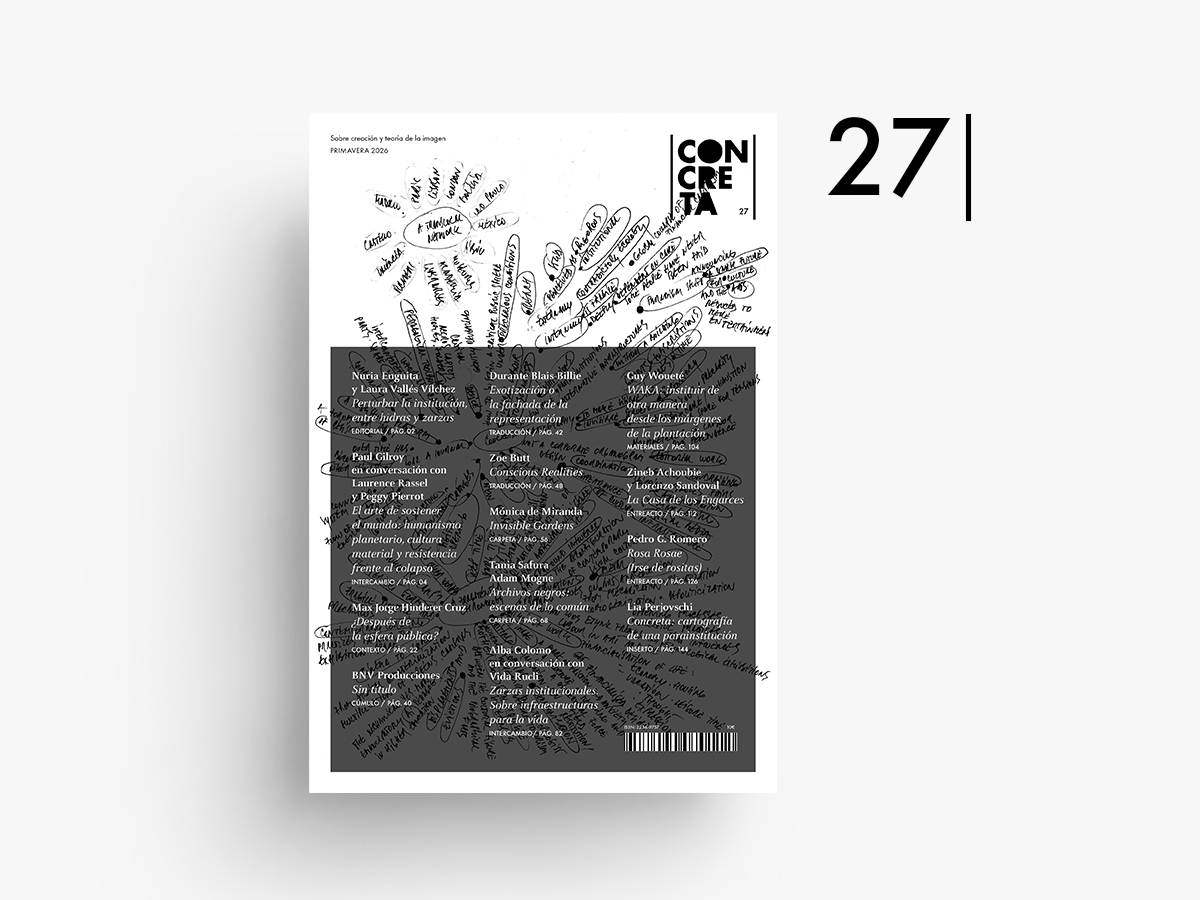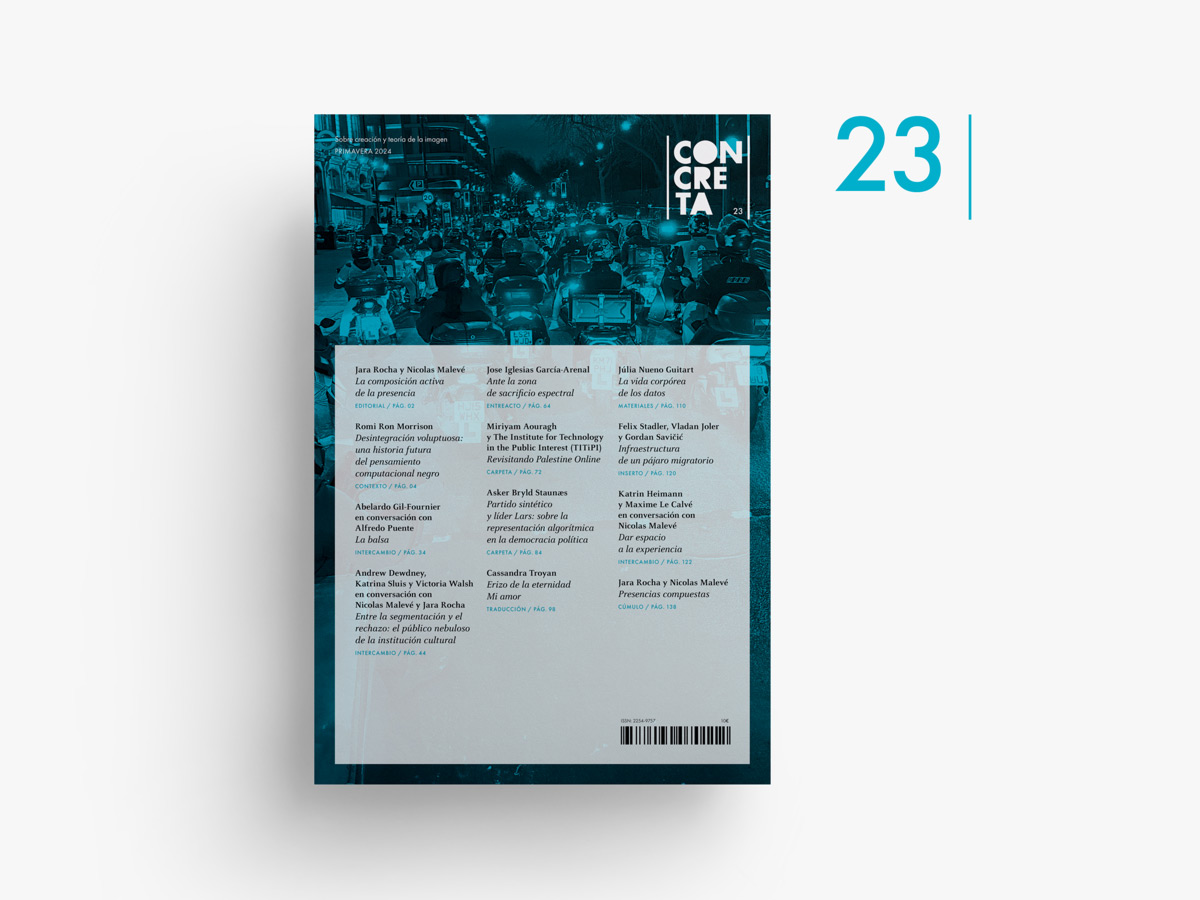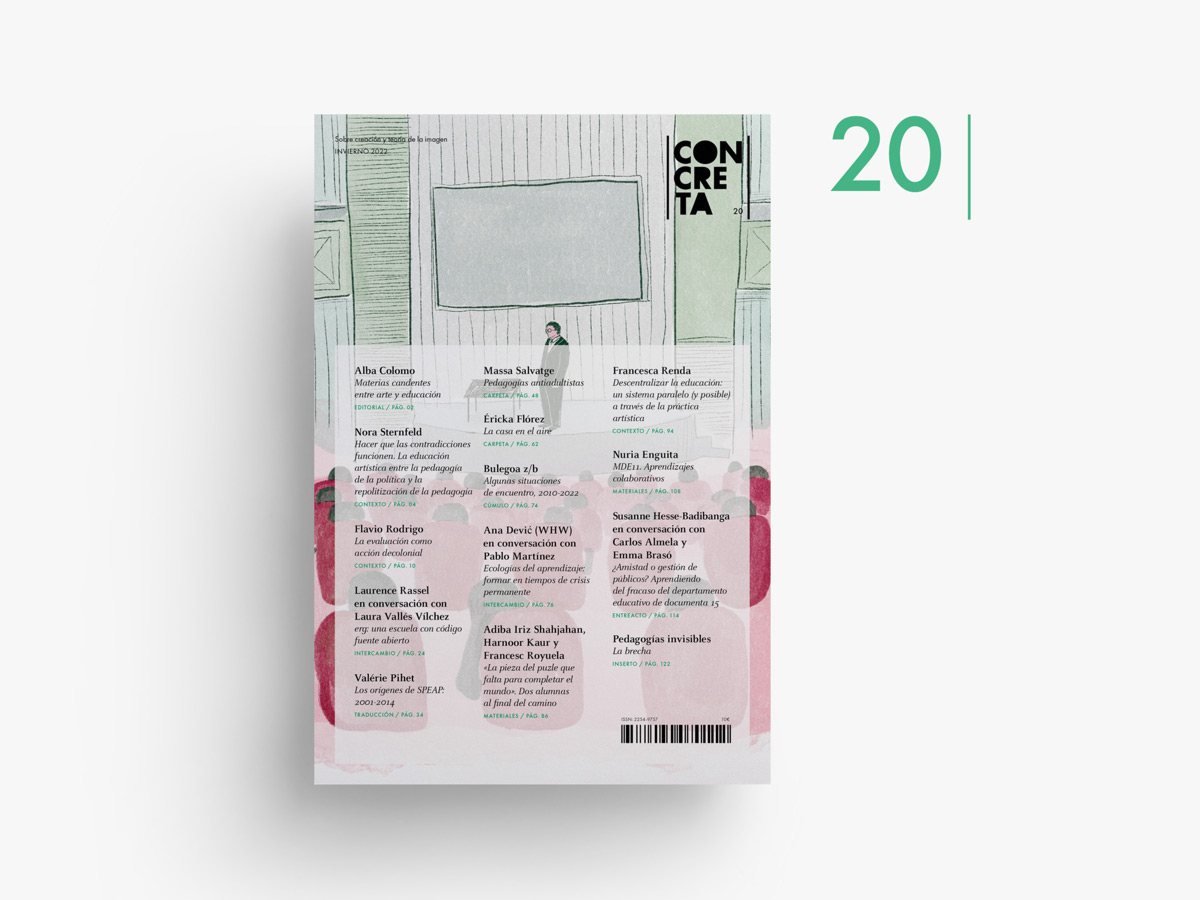

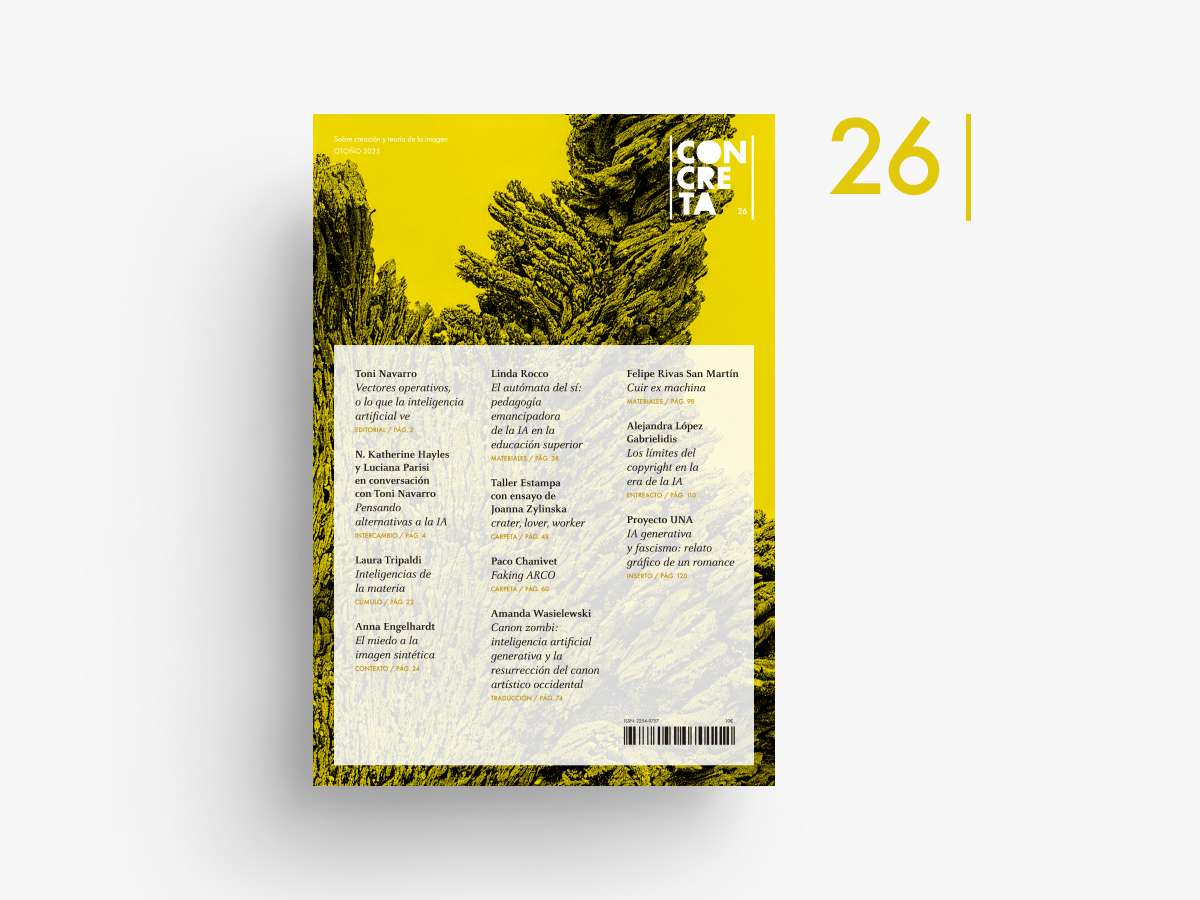
Concreta 26 reflects on the profound influence that artificial intelligence has had on the reconfiguration of contemporary visual culture. In just a few years, AI has moved from being a specialised subfield of computer science to decisively reshaping today’s visuality. This shift cannot be explained solely by computational advances, but by the turn toward models capable of seeing. The move from the symbolic paradigm —which understood intelligence as the manipulation of symbols— to connectionist approaches oriented toward pattern recognition enabled the mechanisation of visual perception. Once machines cease to operate exclusively on explicit representations and begin to interpret, classify and generate images, those images become operational vectors that reconfigure the relationship between model and world. This issue examines how AI has woven itself into social infrastructure through algorithmic mediation in logistics and service platforms, policing and border–control systems, and even in military contexts. Taken together, these processes reveal how algorithmic mediation permeates contemporary existence and the central role images play within it. Under this premise, Concreta 26 approaches this plurality with a systematic intent.
Concreta 26 is edited by Toni Navarro and features contributions from N. Katherine Hayles, Luciana Parisi, Laura Tripaldi, Anna Engelhardt, Linda Rocco, Taller Estampa, Joanna Zylinska, Paco Chanivet, Amanda Wasielewski, Felipe Rivas San Martín, Alejandra López Gabrielidis and Proyecto UNA.