



FOREWORD
To speak of apparatuses, institutions, and infrastructures is to speak of forms of power that shape ways of life. At a moment marked by the exhaustion of democratic institutions, technological concentration, the expansion of artificial intelligence, the financialization of the economy, ecological collapse, and ever more sophisticated forms of necropolitics, power multiplies like a hydra and enters our bodies in subtle and persistent ways.
For Giorgio Agamben, following Michel Foucault, an apparatus is anything capable of capturing, orienting, or shaping gestures, behaviors, and discourses: from a prison or a hospital to an algorithm or language itself. If the apparatus is the tool of capture, the institution is the structure that stabilizes it; infrastructure is the set of material, economic, technological, affective, and territorial conditions that make its functioning possible. Far from being a mere support, infrastructures organize circulation, distribute resources, and produce forms of dependence. But if, as Ursula K. Le Guin wrote, the first human technology was a container before it was a spear, perhaps we should think of infrastructures as that which makes it possible to contain, transmit, and care when the conditions of collective life are increasingly difficult to guarantee.
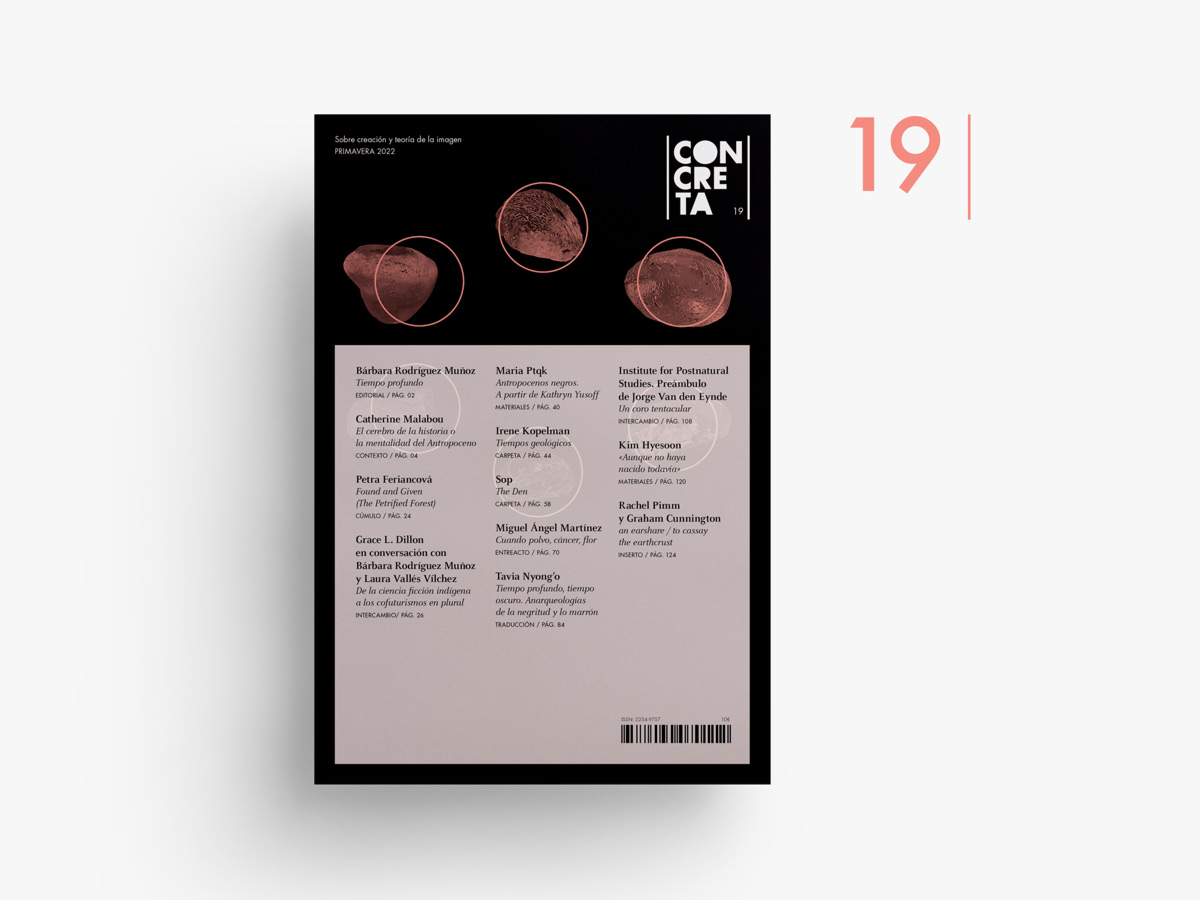
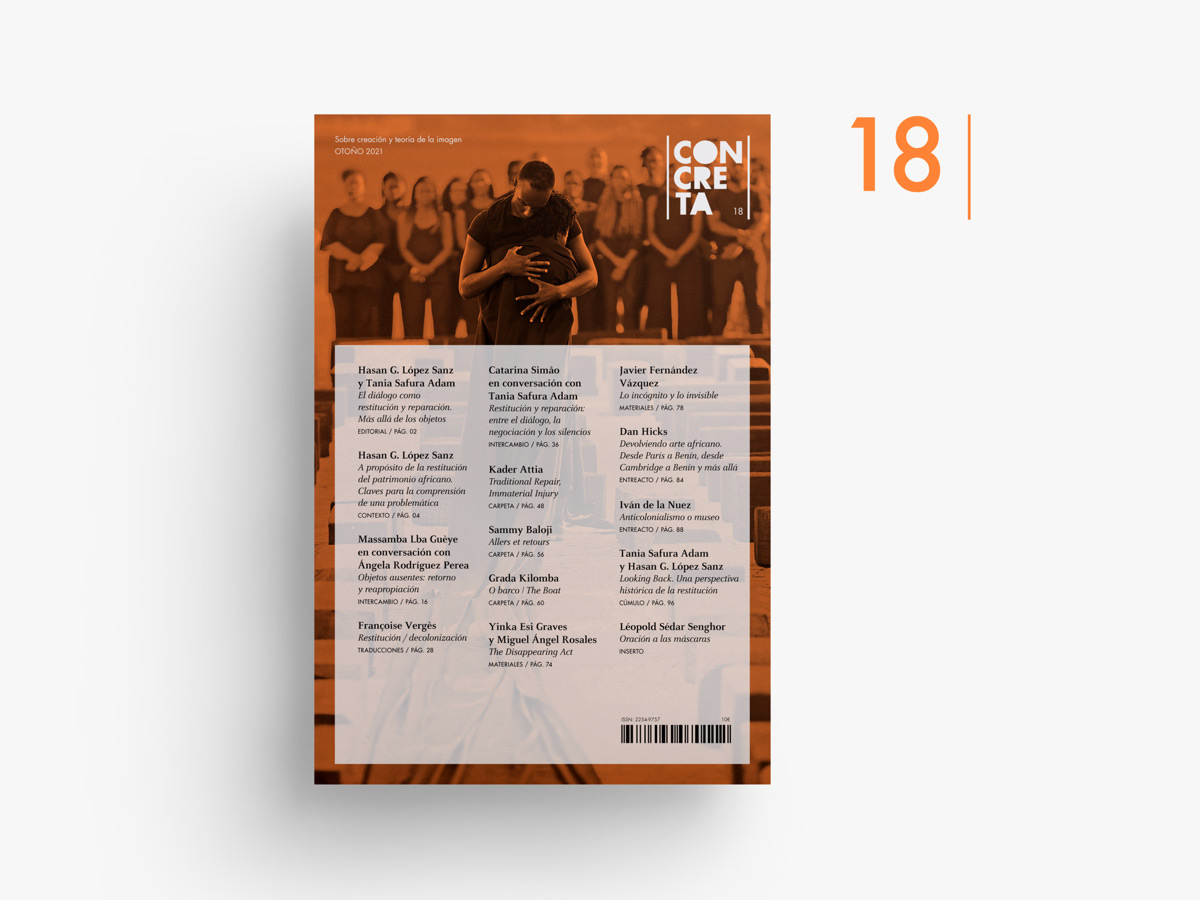
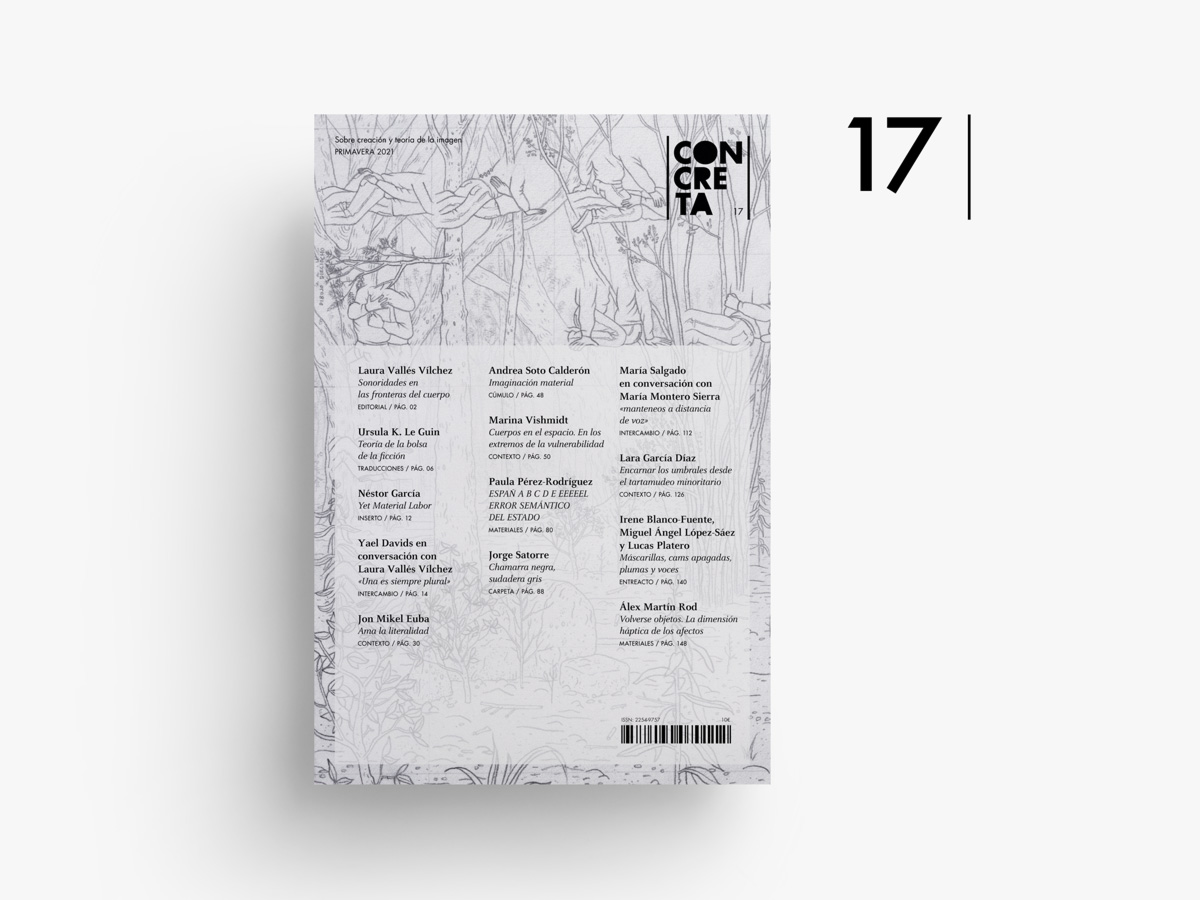
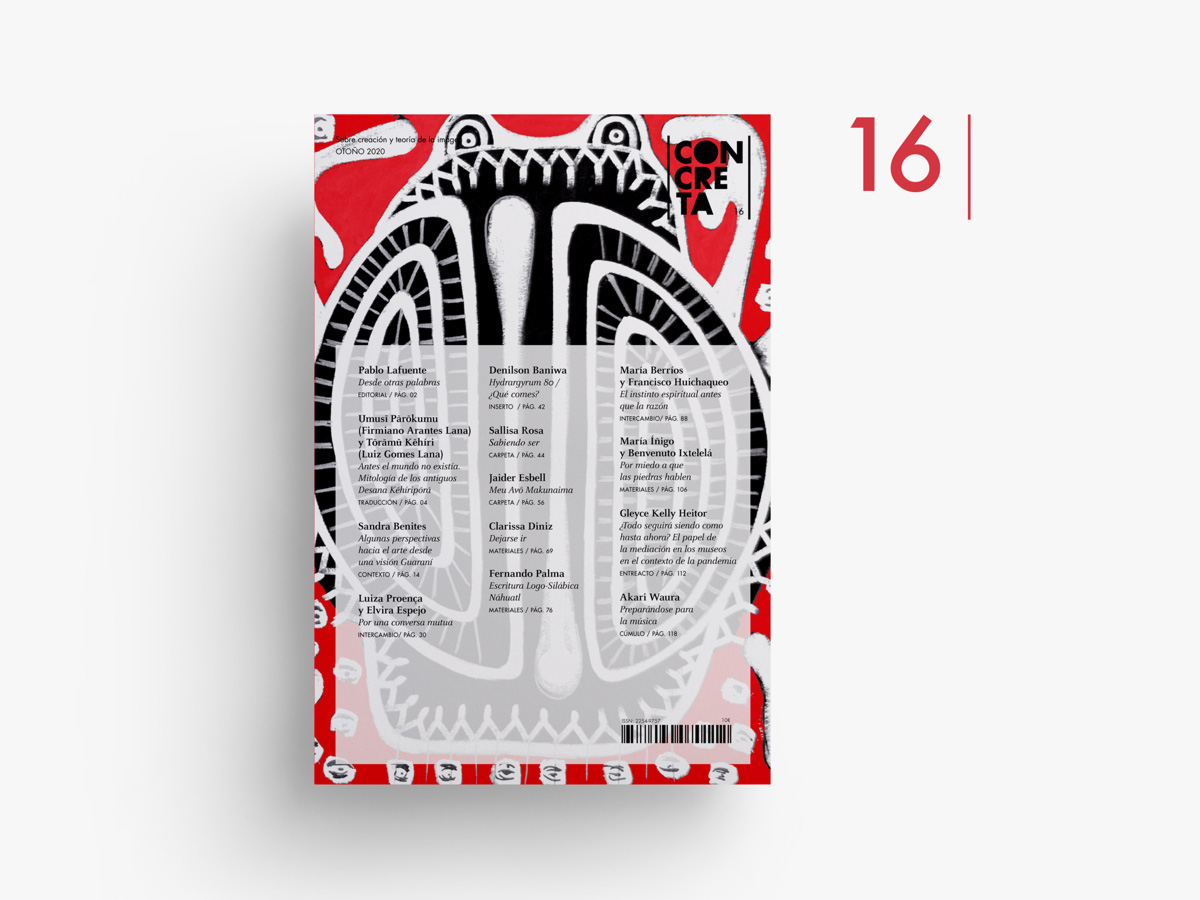
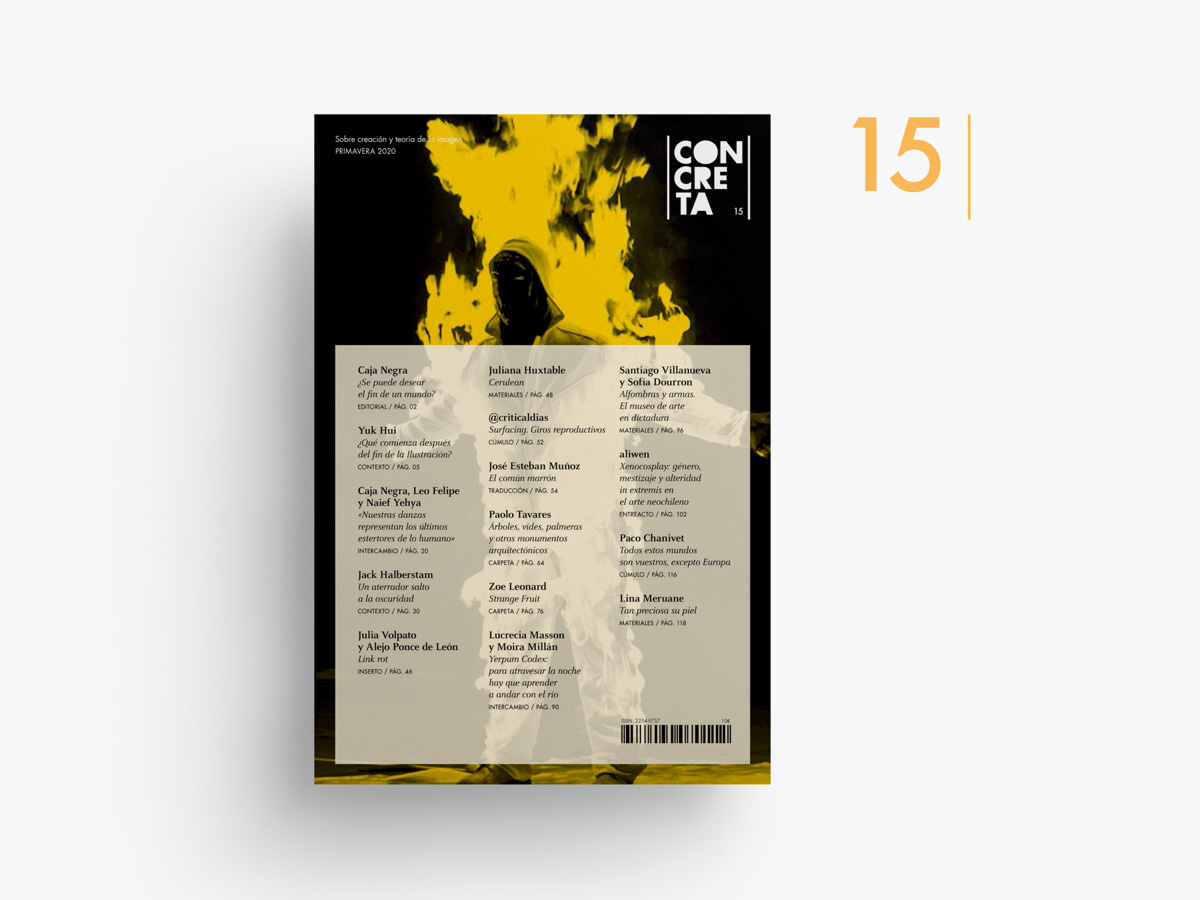
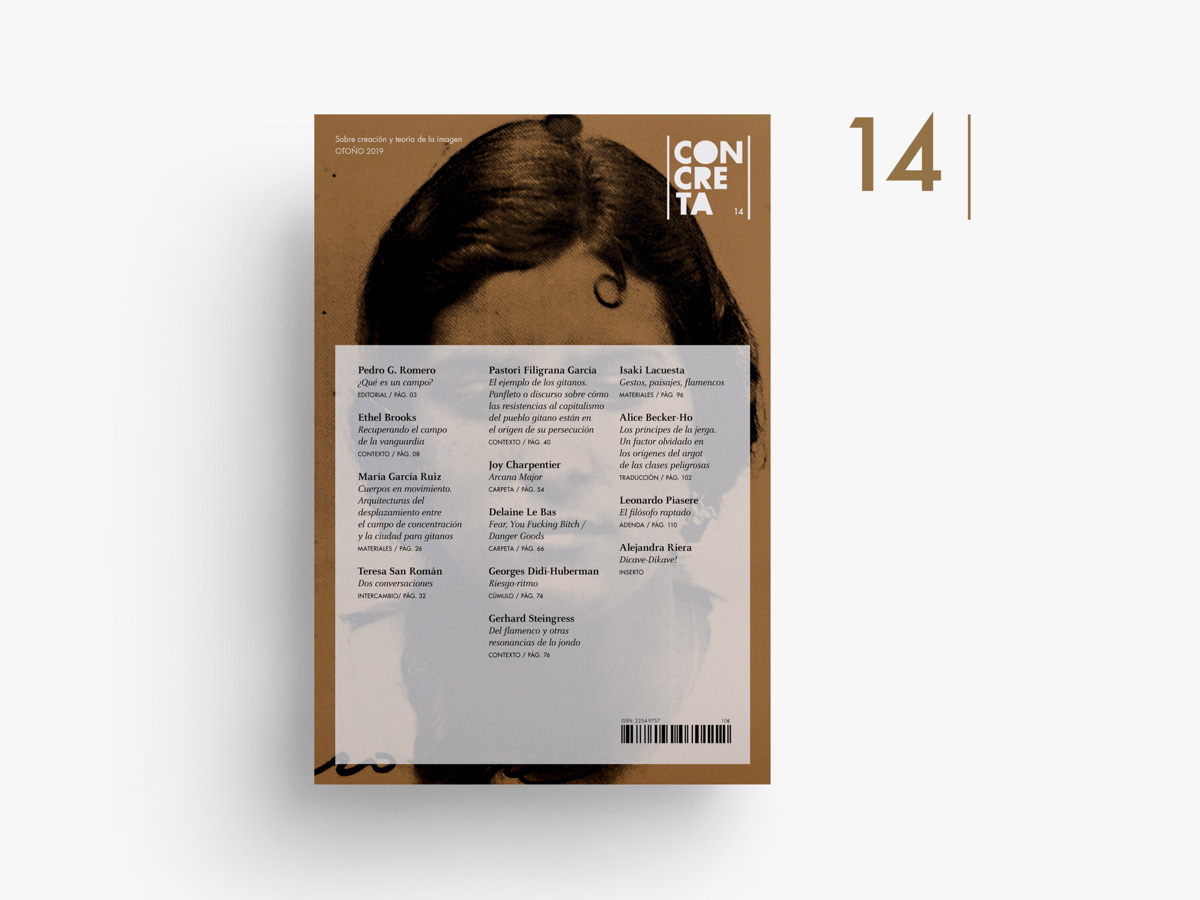
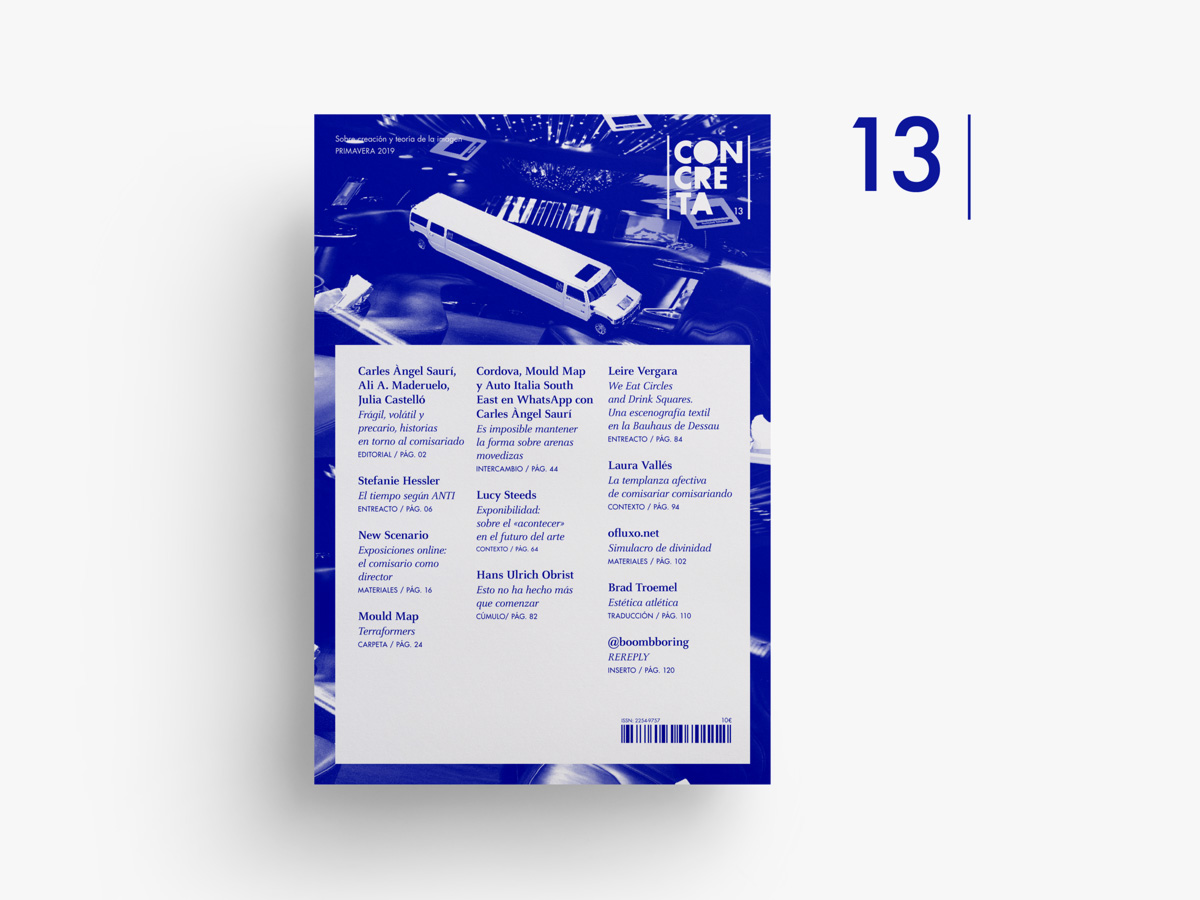
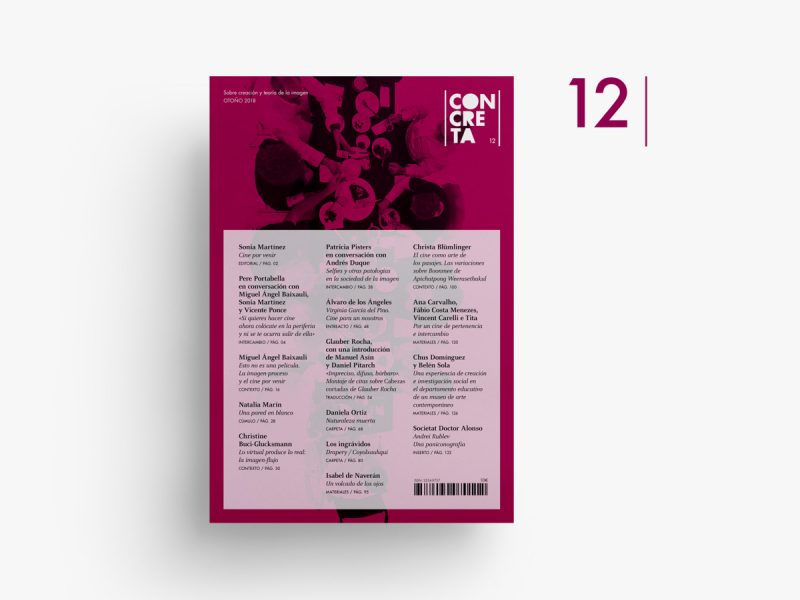
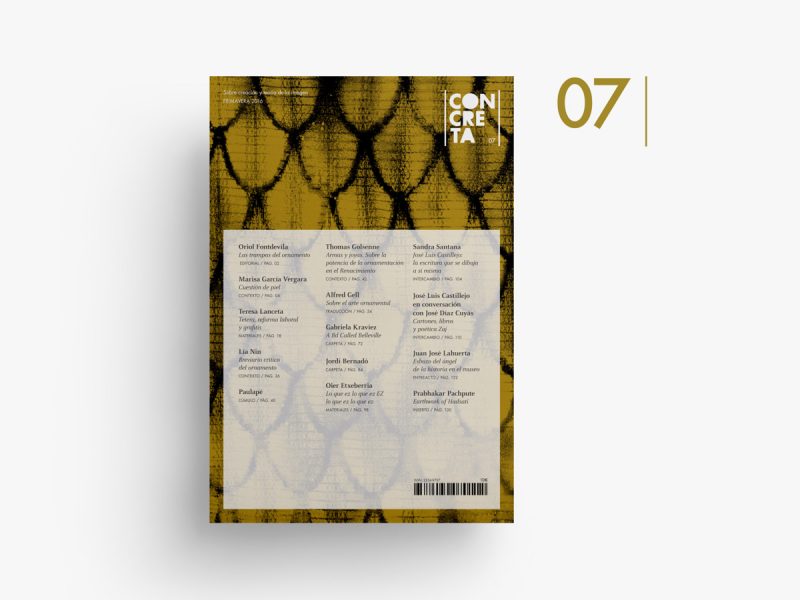
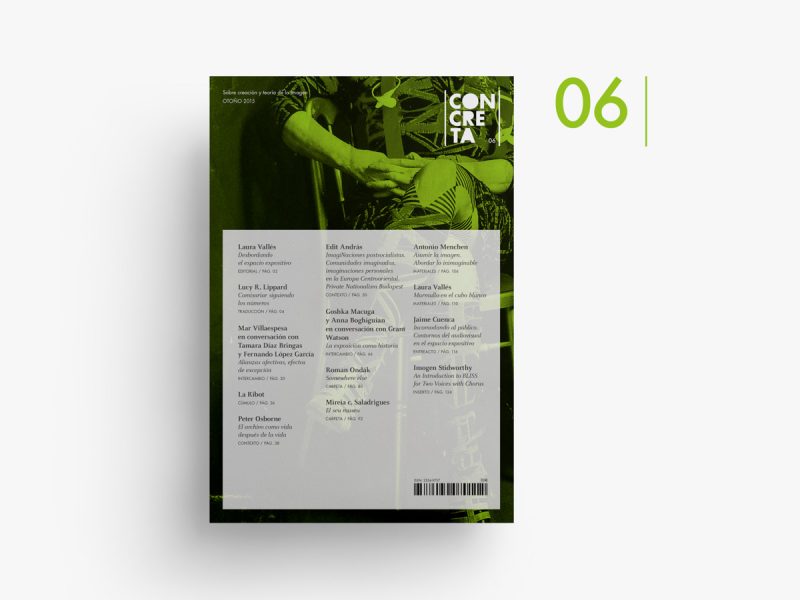
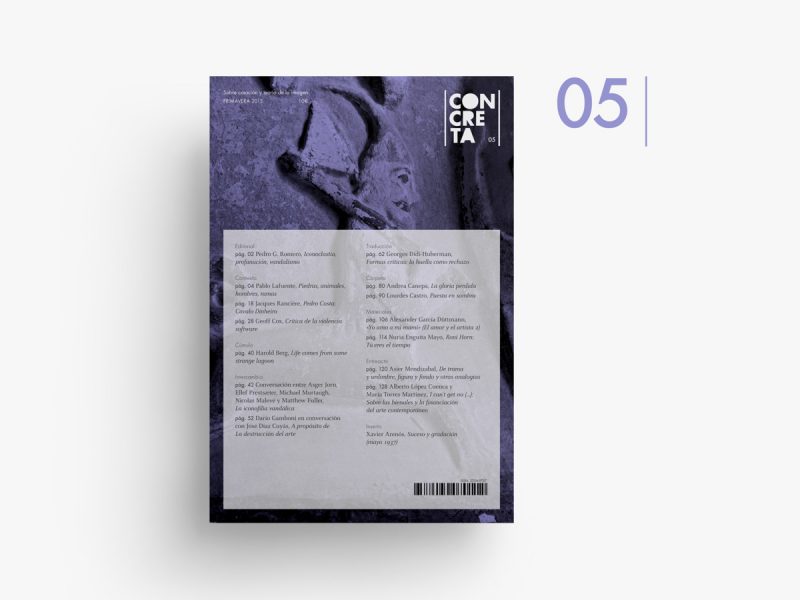
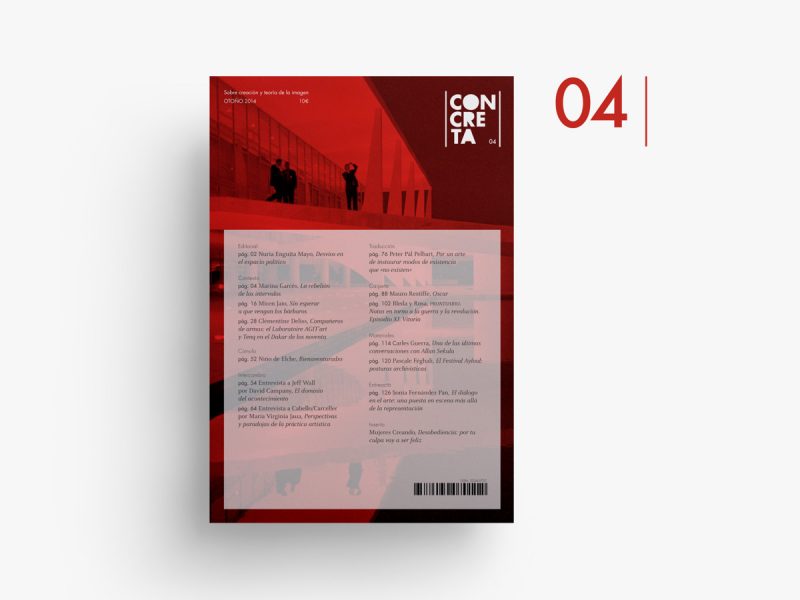
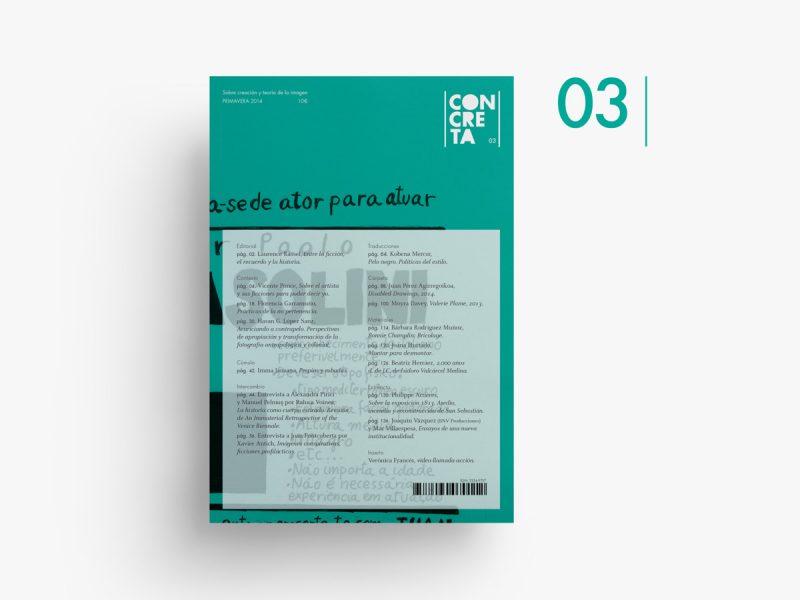
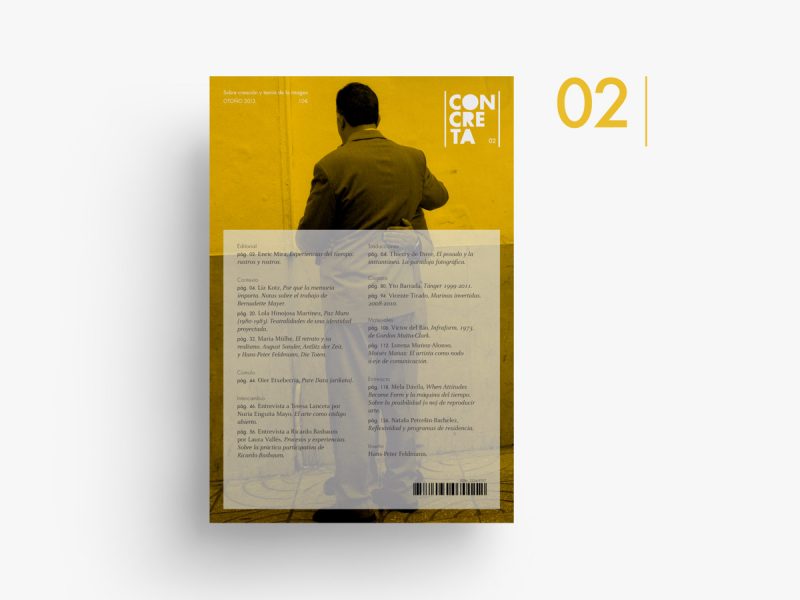
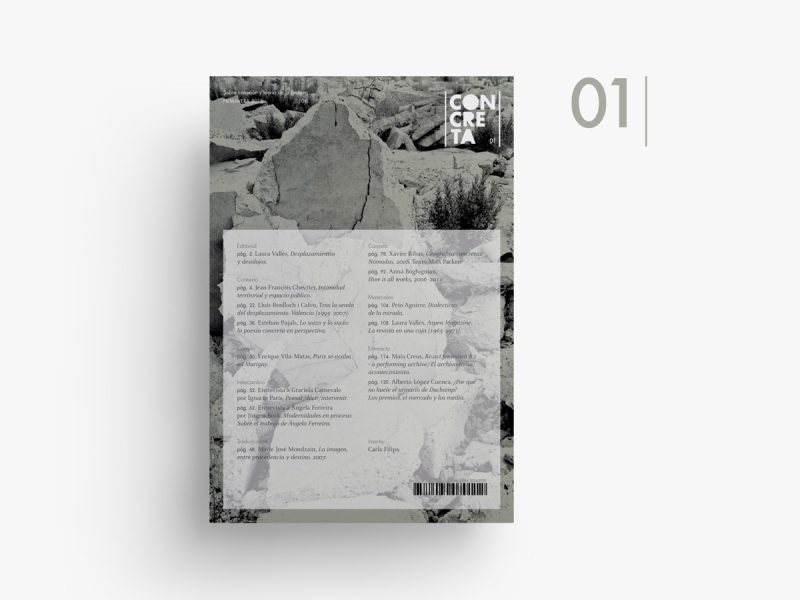
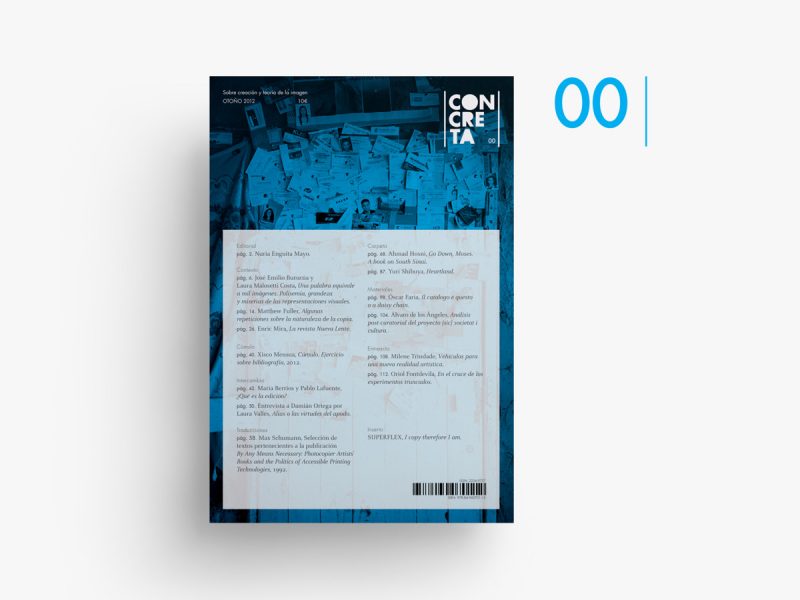
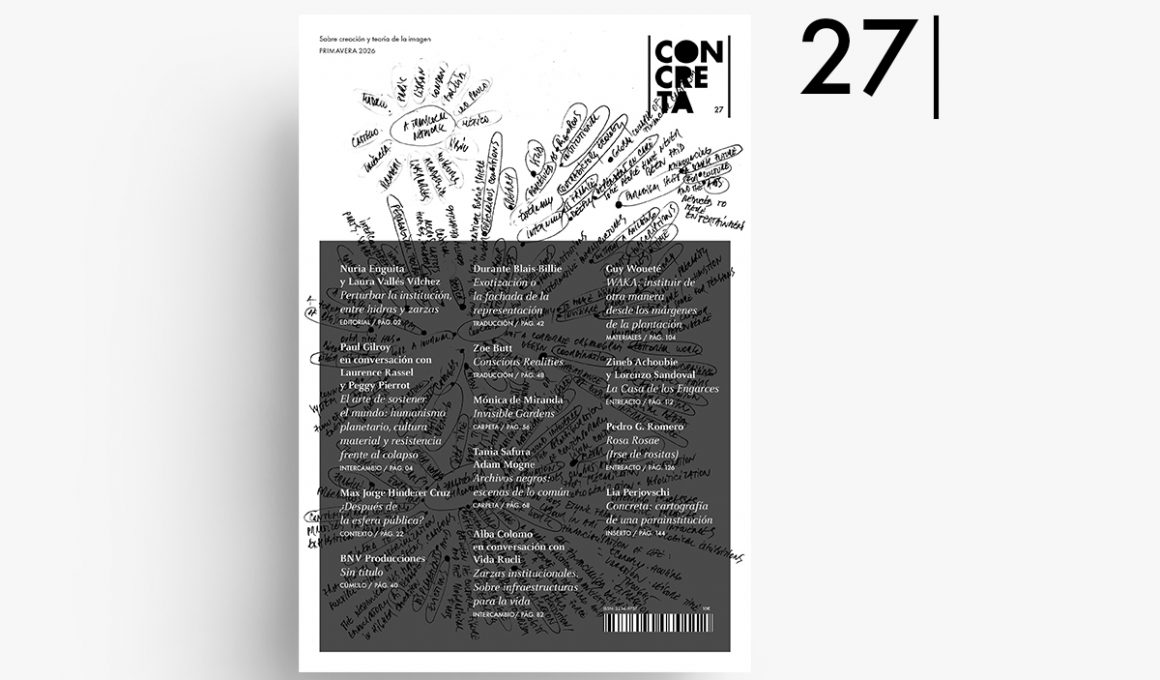
This is what Concreta 27 is about. But it is also about imagining other ways of instituting, inhabiting the cracks in the system, and disturbing the habits of the police-institution, to put it with Rancière. For us, these questions are not merely an object of study. Since 2012, Concreta has been a magazine, but also an editorial platform, an informal school, a dispersed archive, and an unlikely cultural infrastructure sustained by care and persistence. Lia Perjovschi’s contribution maps this ecology of dependencies, and from it a question emerges: what infrastructures truly sustain cultural life? How can we continue to build them when the conditions for doing so are deteriorating?
We know this, even if at times we seem to forget it. We claim political agency for art while overlooking, as Max Jorge Hinderer Cruz, Paul Gilroy, and Guy Wouété remind us, that Western modernity was built upon a systematically silenced underside: slavery, whose economic, social, and political matrix was the plantation. More than an economic unit, the plantation constituted a social technology based on exploitation, extractivism, violence, and the appropriation of bodies. And many contemporary cultural infrastructures continue to reproduce those patterns: the extraction of peripheral knowledges, precarious labor, Eurocentric hierarchies, and exoticization. For this reason, Durante Blais-Billie analyzes how the representation of difference can become a façade that reproduces structural inequalities and mechanisms of exclusion.
As BNV Producciones also remind us, the risk lies in forgetting that demand, site of responsibility, and resources must recognize one another if promises of the future are not to remain suspended as unreachable horizons. Thus, Paul Gilroy insists on the need to recover imagination and courage in order to build new forms of coexistence. In the face of advancing authoritarianisms, together with Laurence Rassel and Peggy Pierrot he proposes redistributing resources and knowledges, strengthening collective experience, and rebuilding public spaces. Because the experiences gathered in this issue share that concern: how to institute without crystallizing, and how to sustain structures without reproducing the logics of extraction and domination. From an art school, an editorial project, or a neighborhood community, all of them test sensitive forms of organization capable of responding to their contexts.
Organizations such as La Escocesa, in Barcelona; Robida, in Topolò/Topolove; WAKA, between Cameroon and France; La Casa de los Engarces, in the Ricote Valley; and Sàn Art, in Ho Chi Minh, appear here as spaces where learning is not separated from work, survival, or everyday gestures. Thus, Wouété describes WAKA as an attempt to institute from the margins of the plantation. Vida Rucli and Alba Colomo reflect on forms of belonging based on relational ecologies rather than on property or permanence, proposing an image of the institution as a bramble. Lorenzo Sandoval and Zineb Achoubie present La Casa de los Engarces as a form of organization inspired by the connection between Sufi thought and ecology. And Zoe Butt advocates a situated, sensitive, and interdisciplinary curatorship.
In the dossiers, while Tania Safura Adam Mogne reconstructs scenes of the common from Black archives that challenge official narratives, Mónica de Miranda imagines invisible gardens between Angola, Portugal, and the geographies of the African diaspora as spaces of resistance against migration policies, gentrification, and touristification. And from there Pedro G. Romero moves through Rosalía, Lorca, mysticism, and popular culture to pose a fundamental question: how to exercise real agency in an era dominated by spectacle. His journey recalls that mystical traditions were historically closer to community and mutual aid than to isolated genius; closer, in short, to the institution understood as an interdependent collective practice than as an apparatus of power.
Perhaps that is the question that runs through this issue: not how to escape institutions, but how to transform them and build infrastructures capable of sustaining what they have ceased to protect. The practices gathered here are situated between critique and construction. So too is Concreta itself, which continues to search, between hydras and brambles, for how to get away unscathed while still confronting spectacle from a position of agency.